Description
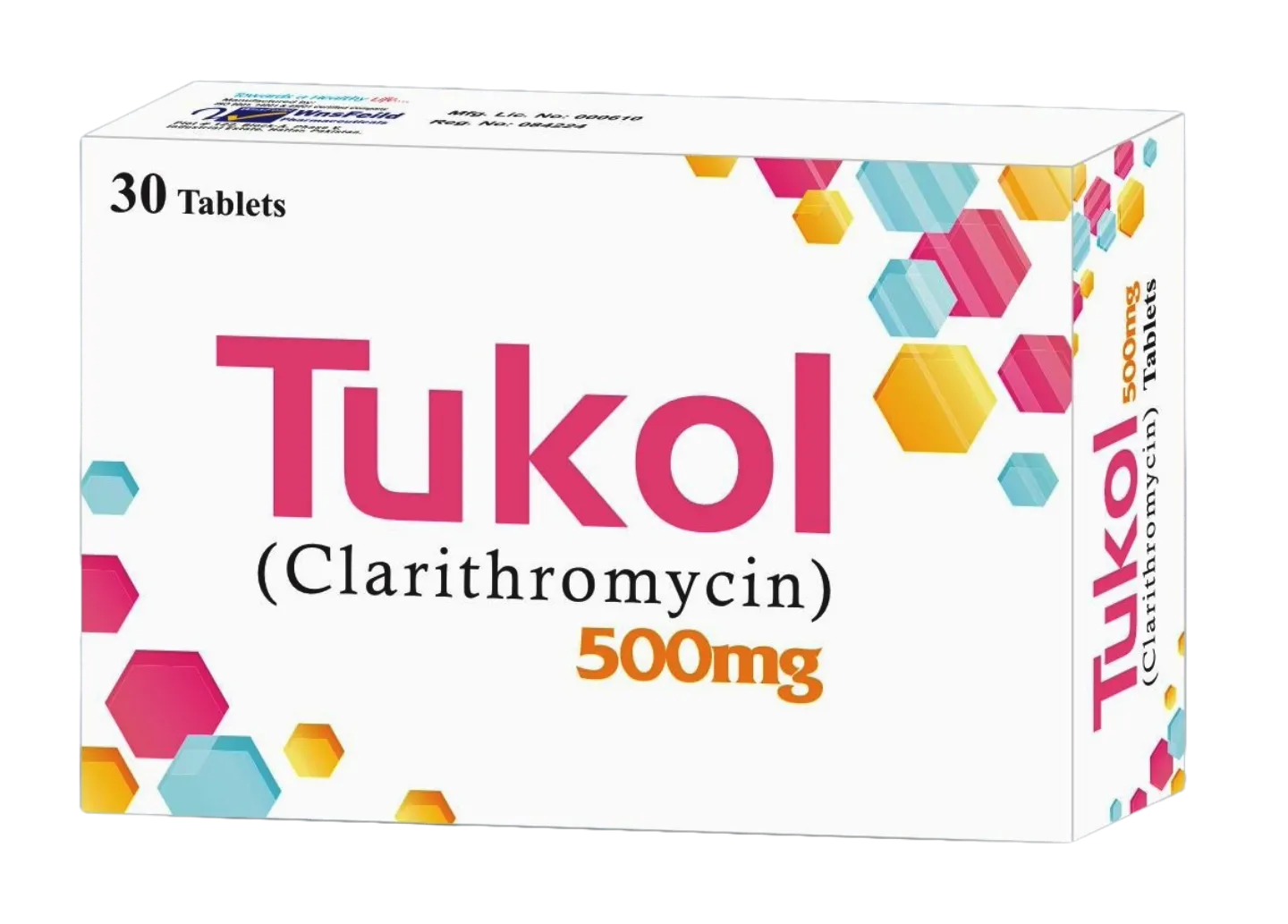
Tukol
Description
Clarithromycin is a macrolide antibiotic that is a semi-synthetic derivative of erythromycin.
Indications
Clarithromycin is used to treat a variety of bacterial infections in different parts of the body.
- Respiratory tract infections: It is commonly used for infections like pneumonia, bronchitis, sinusitis, pharyngitis (strep throat), and tonsillitis.
It is effective against both typical and “atypical” pneumonia-causing bacteria, such as Mycoplasma pneumoniae and Chlamydia pneumoniae.
- Skin and soft tissue infections: It can be used to treat mild to moderate skin infections like cellulitis.
- Ear infections: It is used for acute otitis media (ear infections).
- Treatment of Helicobacter pylori (H. pylori) infection: Clarithromycin is a key component of multi-drug “triple therapy” regimens used to eradicate H.
pylori, a bacterium that causes peptic and duodenal ulcers.
- Treatment and prevention of Mycobacterium avium complex (MAC) infection: It is used to treat and prevent this infection, which often affects individuals with HIV/AIDS.
- Penicillin allergy: It is often used as an alternative to penicillin-based antibiotics in patients who have a penicillin allergy.
Mechanism of Action
Clarithromycin’s mechanism of action is based on its ability to stop bacterial protein synthesis.
- Binding to the 50S Ribosomal Subunit: Clarithromycin reversibly binds to the 23S ribosomal RNA (rRNA) of the 50S subunit of the bacterial ribosome.
The ribosome is the cellular machinery responsible for translating genetic code from messenger RNA (mRNA) into proteins.
- Inhibition of Translocation: By binding to this site, clarithromycin blocks the “translocation” step of protein synthesis.
Translocation is the movement of the ribosome along the mRNA molecule, which is necessary to add new amino acids to the growing peptide chain.
- Protein Synthesis Cessation: This interruption prevents the ribosome from moving, effectively halting the elongation of the protein chain.
Without the ability to create essential proteins, the bacteria cannot grow, reproduce, or perform basic functions, which ultimately leads to their death or prevents their proliferation.
While clarithromycin is generally considered a bacteriostatic agent (inhibits growth), it can be bactericidal (kills bacteria) at higher concentrations or against certain susceptible organisms.

Reviews
There are no reviews yet.