Description
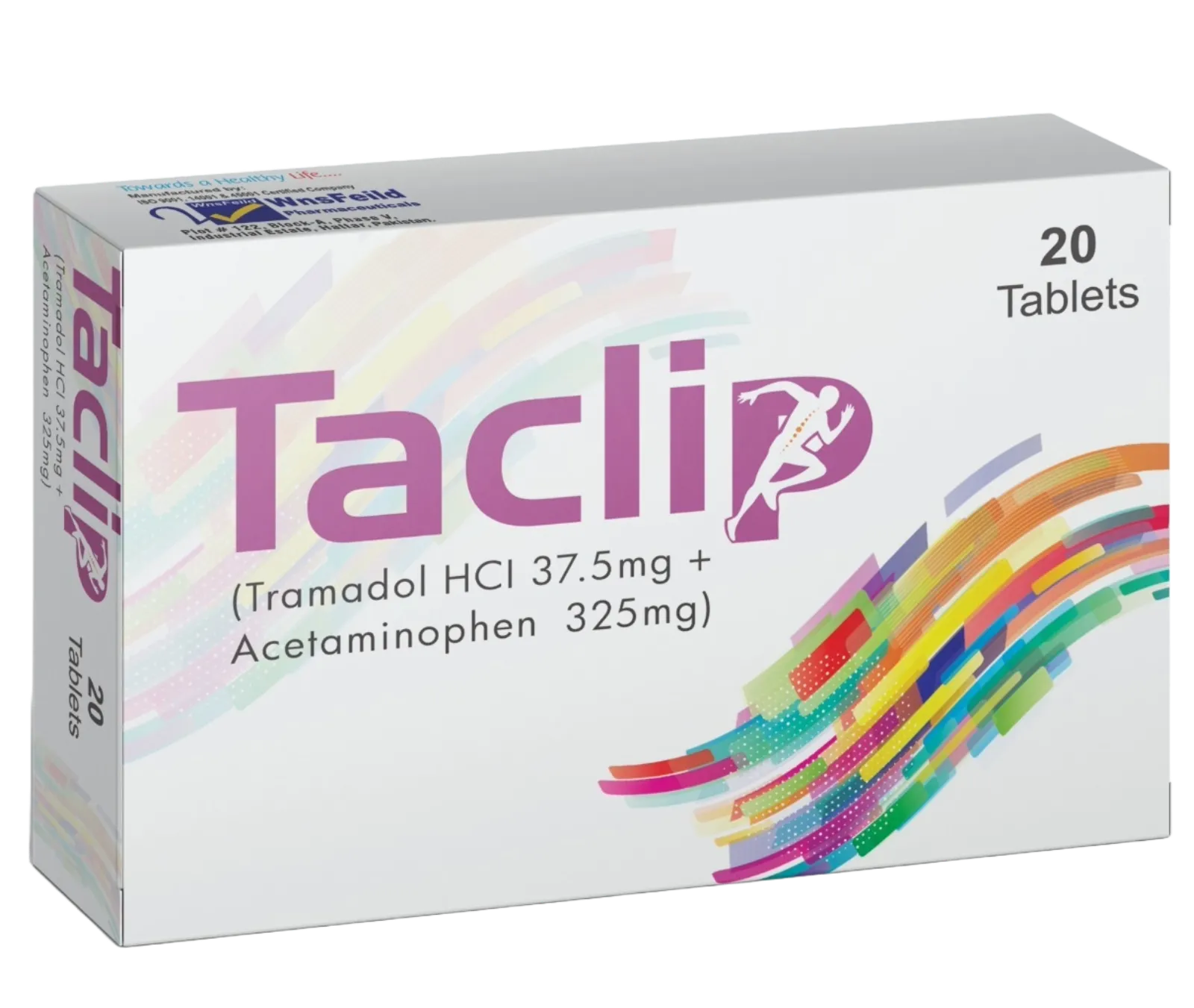
Taclip
Description
The combination of Tramadol Hydrochloride and Acetaminophen is a fixed-dose oral medication that combines two distinct analgesics: a synthetic opioid (Tramadol) and a non-opioid pain reliever (Acetaminophen, also known as paracetamol). This combination is designed to provide synergistic pain relief by targeting different pain pathways in the body.
Indications
This combination drug is specifically indicated for the management of moderate to moderately severe acute pain. It is not typically recommended for long-term chronic pain, and its use is limited to situations where the pain is not adequately relieved by other analgesics.
Mechanism of Action
The therapeutic effect of this combination is based on the distinct yet complementary mechanisms of its two components, working together to provide a more comprehensive and potent analgesic effect than either drug alone.
1. Tramadol Hydrochloride
- Mechanism: Tramadol has a dual mechanism of action:
- Weak Opioid Agonism: It acts as a weak agonist at the mu (μ) opioid receptors in the central nervous system.
- Monoamine Reuptake Inhibition: It also inhibits the neuronal reuptake of norepinephrine and serotonin, which enhances the body’s descending inhibitory pain pathways.
- Role in Combination: Tramadol provides its analgesic effect through both opioid and non-opioid pathways, helping to reduce the perception of pain and inhibit pain signals.
2. Acetaminophen
- Mechanism: The exact mechanism of acetaminophen is not fully understood, but it is believed to work primarily in the central nervous system.
- Prostaglandin Inhibition: It is a weak inhibitor of cyclooxygenase (COX) enzymes, particularly in the central nervous system. This reduces the production of prostaglandins that are involved in pain and fever.
- Central Action: It may also act on other descending pain pathways, possibly involving serotonin, to enhance pain relief.
- Role in Combination: Acetaminophen provides a non-opioid analgesic effect that is distinct from tramadol’s.
Synergistic Effect
The combination of Tramadol and Acetaminophen provides a powerful synergistic analgesic effect.
- Tramadol’s opioid and monoamine effects are complemented by Acetaminophen’s central analgesic action.
- By targeting different pain pathways, the combination provides a multi-modal approach to pain relief, often allowing for a lower dose of each component to be used while achieving greater overall efficacy.
- This approach can be particularly beneficial as it allows the clinician to use a lower dose of the opioid component (tramadol), which may help to reduce the risk of opioid-related side effects.
Reviews
There are no reviews yet.