Description
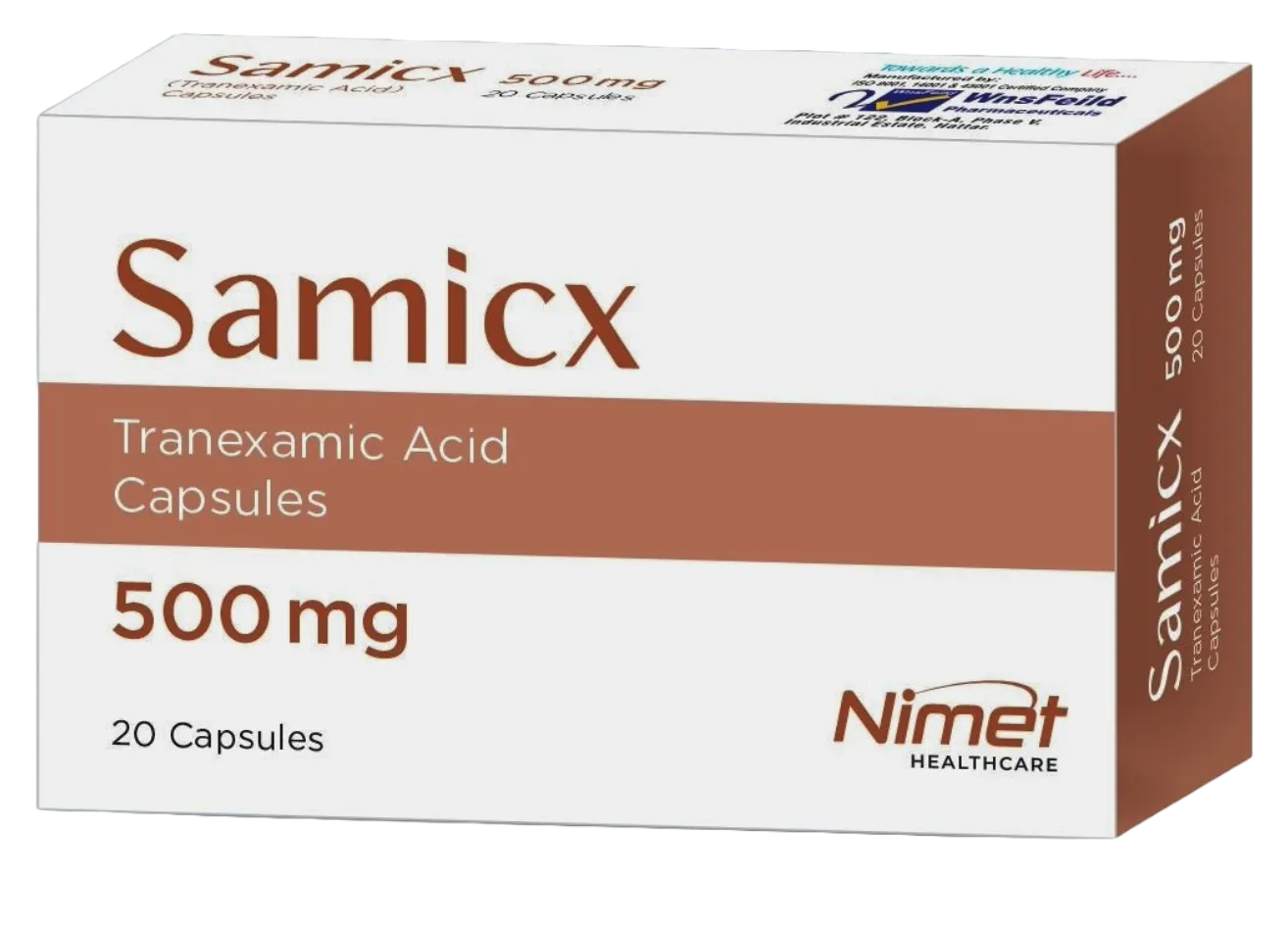
Samicx (Tranexamic Acid)
Description
Tranexamic acid (TXA) is an antifibrinolytic medication, which means it helps to prevent the breakdown of blood clots.
Indications
Tranexamic acid is used to treat or prevent excessive bleeding in a variety of contexts.
- Heavy Menstrual Bleeding (HMB): It is a common and FDA-approved treatment for cyclic heavy menstrual bleeding in women.
- Trauma: It is used in the management of severe bleeding after major trauma, especially if given within the first three hours of the injury, as it has been shown to reduce mortality.
- Surgical Procedures: It is frequently used to reduce blood loss during and after surgeries, particularly in orthopedic, cardiac, and spinal procedures, which can reduce or eliminate the need for blood transfusions.
- Dental Procedures: It is used to control or prevent bleeding following tooth extractions, especially in patients with bleeding disorders like hemophilia.
- Other Bleeding Disorders: It can be used to manage bleeding in conditions like hereditary angioedema and to treat nosebleeds.
Mechanism of Action
To understand the mechanism of tranexamic acid, it’s helpful to know about the body’s natural process for breaking down blood clots, which is called fibrinolysis.
- The Fibrinolytic System: After a blood clot is formed to stop bleeding, the body initiates a process to gradually break it down.
A key enzyme in this process is plasmin, which is responsible for dissolving the fibrin meshwork that holds the clot together. Plasmin is formed from an inactive precursor called plasminogen.
- The Role of Plasminogen: Plasminogen binds to the fibrin clot at specific sites called lysine-binding sites.
This binding is a necessary step for the activation of plasminogen into plasmin. - Tranexamic Acid’s Action: Tranexamic acid is a synthetic lysine analog.
Because of its similar structure, it acts as a competitive inhibitor of plasminogen activation. It reversibly binds to the lysine-binding sites on the plasminogen molecule. By occupying these sites, tranexamic acid prevents plasminogen from binding to the fibrin clot.
- Resulting Effect: By preventing plasminogen from being activated on the clot’s surface, tranexamic acid inhibits the formation of plasmin.
This, in turn, prevents the breakdown of the fibrin clot, thereby stabilizing it and promoting hemostasis (the process of stopping bleeding).
In essence, while blood thinners like Rivaroxaban work to prevent a clot from forming in the first place, tranexamic acid works to preserve and strengthen a clot that has already formed, which is why it is used to control existing or anticipated bleeding.

Reviews
There are no reviews yet.