Description
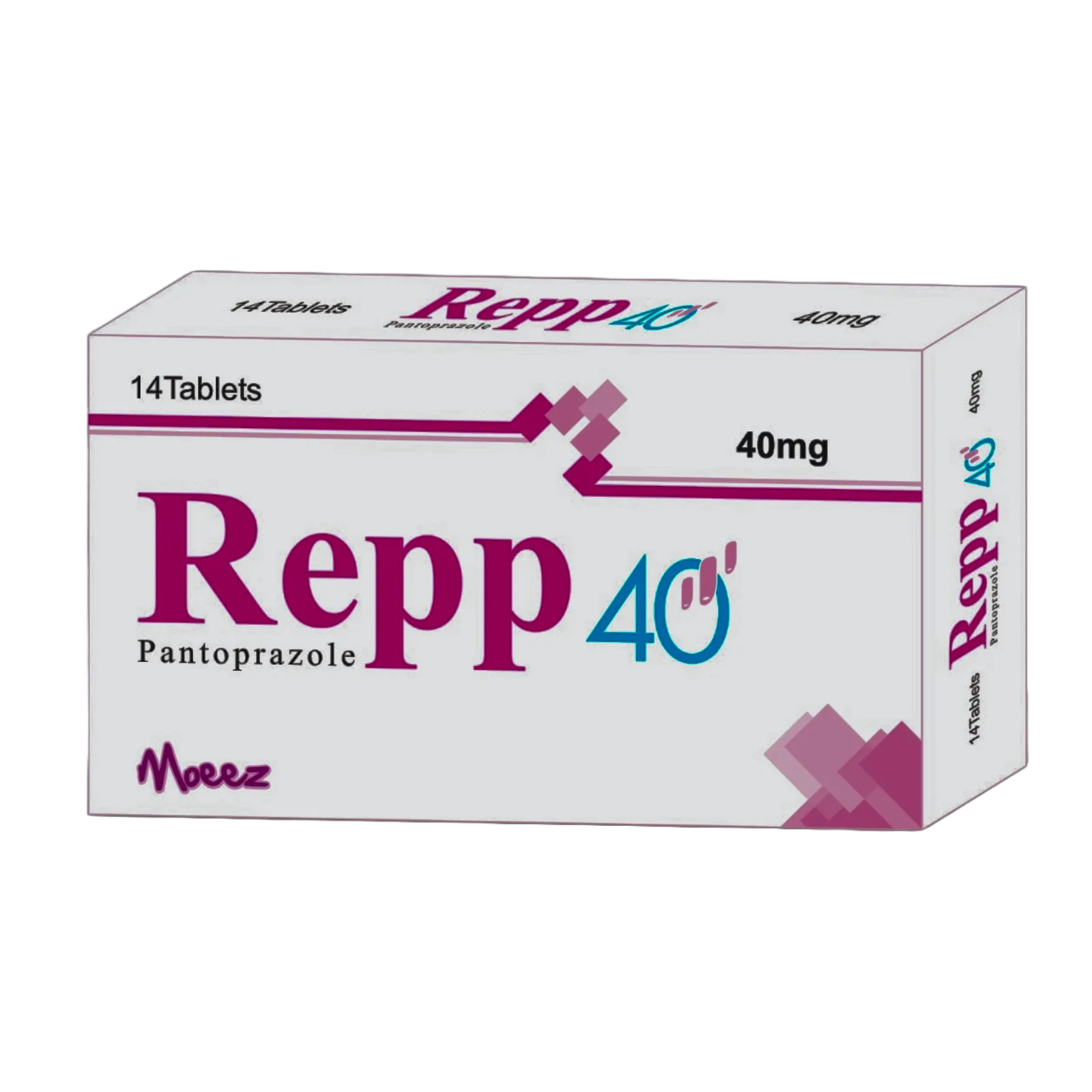
Repp-40
Description
Pantoprazole sodium is a substituted benzimidazole and a member of the proton pump inhibitor (PPI) class of drugs.
Indications
Pantoprazole sodium is used for the treatment of various conditions caused by excessive stomach acid.
- Erosive Esophagitis: Used for the short-term healing and long-term maintenance of erosive esophagitis, which is damage to the esophagus caused by gastroesophageal reflux disease (GERD).
- GERD (Gastroesophageal Reflux Disease):
Used for the treatment of GERD and associated symptoms like heartburn and acid regurgitation.
- Zollinger-Ellison Syndrome: Used for the long-term management of this rare hypersecretory condition.
- Risk reduction of rebleeding from gastric or duodenal ulcers: The intravenous formulation is often used in a hospital setting for patients who have had a bleeding ulcer to maintain a high gastric pH and prevent rebleeding.
- Prophylaxis of stress ulcers: In critically ill patients, it is used to prevent the formation of stress-related gastric ulcers.
Mechanism of Action
Pantoprazole’s mechanism of action is based on its ability to inhibit the enzyme responsible for the final step of gastric acid production.
- Prodrug Activation: Pantoprazole is an inactive prodrug when administered.
It is absorbed into the bloodstream and travels to the acid-secreting parietal cells in the stomach lining. In the highly acidic secretory canaliculi of these cells, the pantoprazole molecule is converted into its active form.
- Irreversible Inhibition: The activated form of pantoprazole then forms a permanent, irreversible covalent bond with the H+/K+-ATPase enzyme, which is also known as the “proton pump.”
- Blocking Acid Secretion: The proton pump is the final step in the acid secretion process, responsible for pumping hydrogen ions (
H+) into the stomach lumen. By permanently inactivating the proton pump, pantoprazole effectively stops the production of gastric acid, regardless of the stimulus (e.g., food, histamine, or gastrin). - Sustained Effect: The irreversible binding means that the acid-suppressing effect persists much longer than the drug’s short half-life in the bloodstream. The body cannot resume acid production until it synthesizes new proton pumps, which takes approximately 24 hours. This is why a once-daily dose is sufficient to provide a powerful and prolonged reduction in stomach acid.
A key feature of pantoprazole is its high selectivity for the parietal cells’ acidic environment.
Reviews
There are no reviews yet.