Description
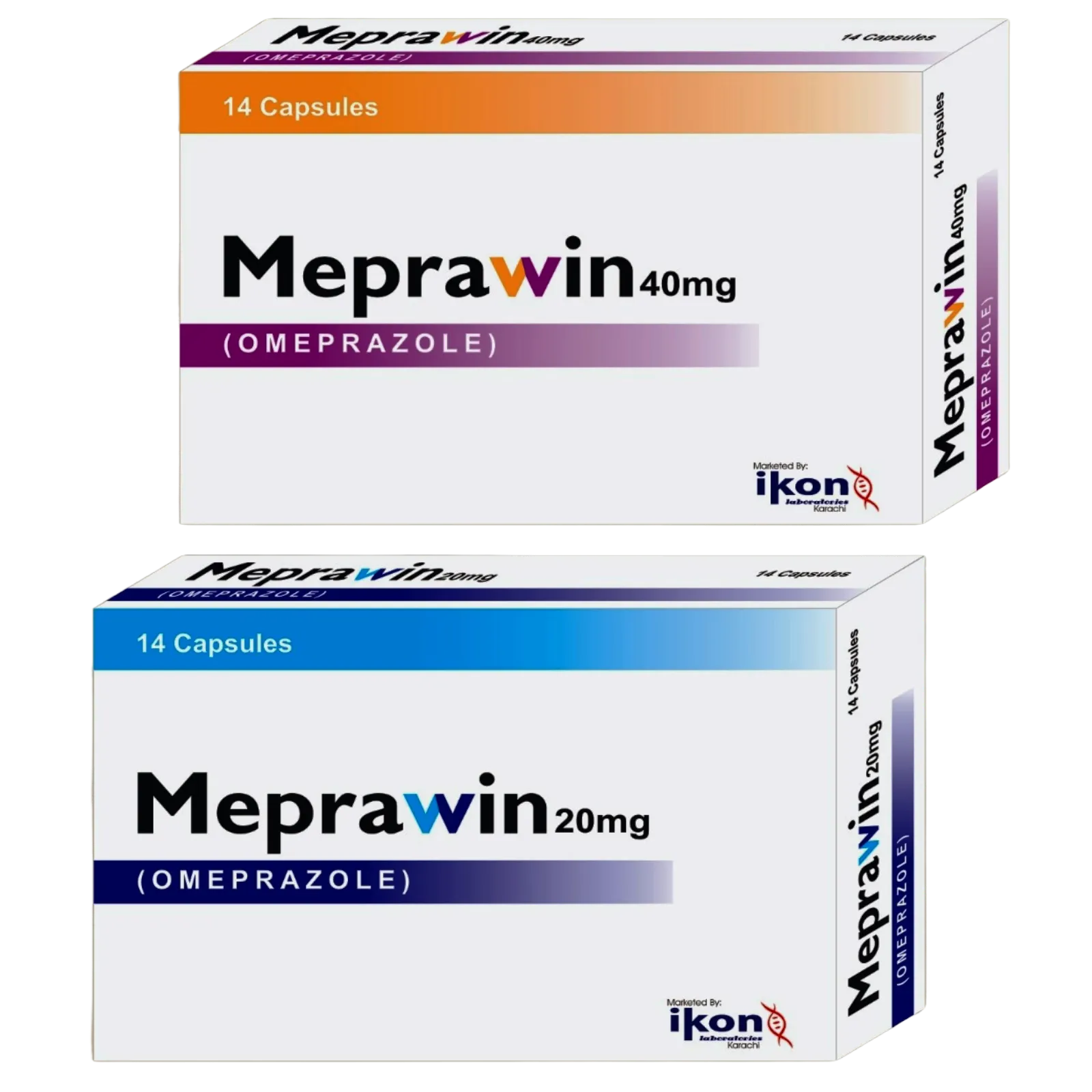
Meprawin
Description
Omeprazole is a synthetic, substituted benzimidazole drug that belongs to the class of medications known as proton pump inhibitors (PPIs).
Indications
Omeprazole is widely used to treat and prevent a variety of conditions caused by excess stomach acid.
- Gastroesophageal Reflux Disease (GERD): It is used for the short-term treatment of heartburn, acid regurgitation, and other symptoms of GERD, as well as for the healing and maintenance of erosive esophagitis.
- Stomach and Duodenal Ulcers: It is used to treat existing ulcers and to prevent their recurrence.
It is a key component in multi-drug regimens for the eradication of Helicobacter pylori (H. pylori) infection, which is a major cause of peptic ulcers.
- Zollinger-Ellison Syndrome: Omeprazole is used for the long-term management of this rare hypersecretory condition where the stomach produces an excessive amount of acid.
- Prevention of NSAID-induced ulcers: It is prescribed to patients who are at high risk of developing gastric ulcers from long-term use of nonsteroidal anti-inflammatory drugs (NSAIDs).
Mechanism of Action
Omeprazole’s mechanism of action is based on its ability to inhibit the enzyme that pumps acid into the stomach.
- Prodrug Activation: Omeprazole is a prodrug, meaning it is pharmacologically inactive in its original form.
After being absorbed from the small intestine, it enters the bloodstream and travels to the parietal cells in the stomach lining. - Conversion to Active Form: In the highly acidic environment of the parietal cells’ secretory canaliculi, omeprazole undergoes an acid-catalyzed conversion into its active form, a sulfenamide.
- Irreversible Inhibition of the Proton Pump: This activated form then irreversibly binds to the H+/K+-ATPase enzyme, also known as the “proton pump.” The proton pump is the final and most crucial step in the secretion of gastric acid, responsible for pumping hydrogen ions (H+) into the stomach.
- Cessation of Acid Production: By permanently inactivating the proton pump, omeprazole effectively blocks the production of gastric acid.
This suppression affects both basal (resting) acid secretion and acid secretion stimulated by food or other factors. The effect lasts for an extended period (up to 24 hours or more) because new proton pumps must be synthesized by the cell to restore acid production. This irreversible binding is what makes PPIs so effective at providing sustained acid suppression.
Reviews
There are no reviews yet.