Description
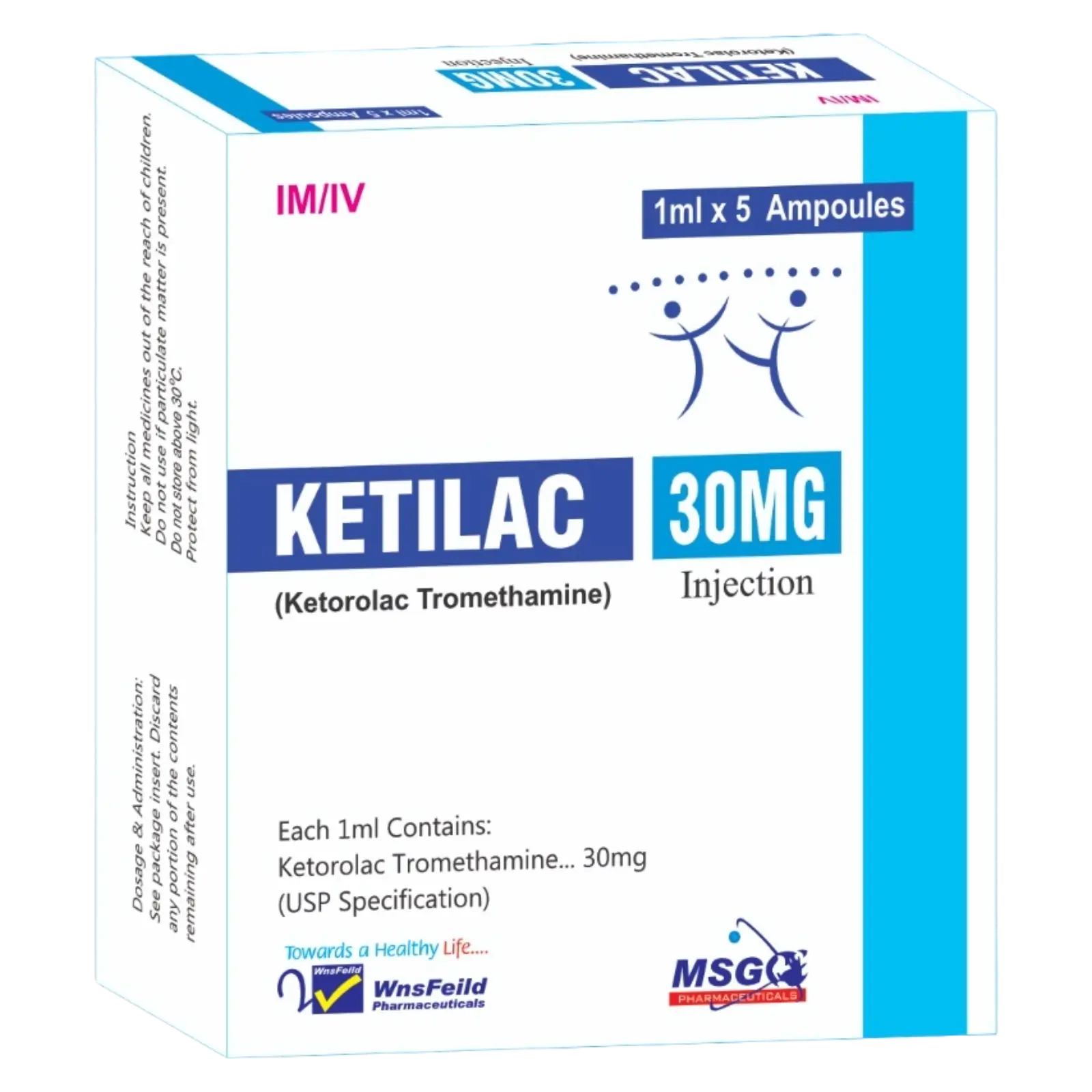
Ketilac
Description
Ketorolac Tromethamine is a potent nonsteroidal anti-inflammatory drug (NSAID).
Indications
Ketorolac is specifically indicated for the short-term (up to 5 days) management of moderately severe acute pain.
- Postoperative Pain: It is widely used for the management of pain following surgical procedures.
- Musculoskeletal Pain: It can be used for the short-term relief of acute musculoskeletal pain.
- Ophthalmic Use: As an eye drop, it is used for the relief of ocular itching caused by seasonal allergic conjunctivitis and for the management of pain and inflammation following cataract surgery.
- Renal Colic: In some regions, it is used for the short-term treatment of pain from kidney stones.
Mechanism of Action
Ketorolac’s mechanism of action is based on its ability to inhibit the synthesis of prostaglandins, which are key mediators of inflammation and pain.
- Non-selective COX Inhibition: Ketorolac works by non-selectively inhibiting the activity of both cyclooxygenase-1 (COX-1) and cyclooxygenase-2 (COX-2) enzymes.
These enzymes are responsible for converting arachidonic acid into prostaglandins.
- Blocking Prostaglandin Synthesis: By inhibiting these enzymes, ketorolac significantly reduces the production of prostaglandins.
-
- The inhibition of COX-2 is responsible for the drug’s primary therapeutic effects: powerful analgesia and anti-inflammatory action.
- The inhibition of COX-2 is responsible for the drug’s primary therapeutic effects: powerful analgesia and anti-inflammatory action.
-
- The inhibition of COX-1 is responsible for some of the common and potentially serious side effects of NSAIDs, such as gastrointestinal bleeding and kidney problems.
- The inhibition of COX-1 is responsible for some of the common and potentially serious side effects of NSAIDs, such as gastrointestinal bleeding and kidney problems.
- No Opioid Receptor Interaction: Unlike opioids, ketorolac’s analgesic effect is not mediated through opioid receptors.
This makes it an effective alternative for patients who cannot take or wish to avoid opioid analgesics, as it does not carry the risk of physical dependence or tolerance.
In summary, ketorolac tromethamine is a potent, non-selective NSAID that provides powerful, short-term pain relief by blocking the synthesis of prostaglandins.
Reviews
There are no reviews yet.