Description
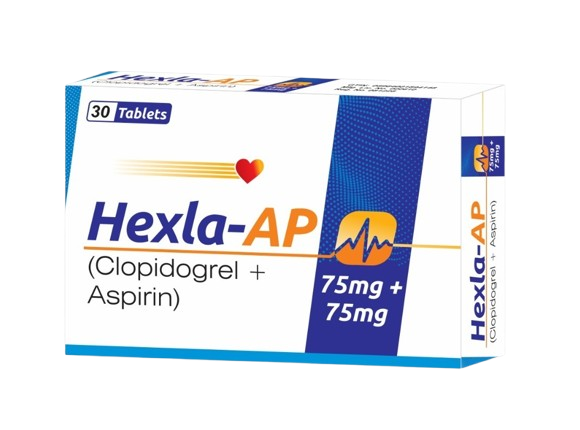
Hexla-AP
Description
Clopidogrel bisulphate and Aspirin are a combination of two antiplatelet medicines, also commonly referred to as “blood thinners.”
Indications
The combination of clopidogrel and aspirin is primarily used to prevent serious or life-threatening problems with the heart and blood vessels.
- Prevention of Heart Attack and Stroke: This is the primary use of the medication. It is prescribed to patients who are at high risk of a heart attack or stroke, including those who have a history of these events, severe chest pain (unstable angina), or peripheral arterial disease.
- Acute Coronary Syndrome (ACS): It is a standard treatment for patients with ACS, a condition where blood flow to the heart is suddenly blocked.
- Post-Surgical Prevention: It is used in patients who have undergone certain heart procedures, such as percutaneous coronary intervention (PCI), which may involve the placement of a coronary artery stent, or coronary artery bypass graft surgery (CABG).
Mechanism of Action
Clopidogrel bisulphate and Aspirin work synergistically to prevent blood clots.
- Aspirin: Aspirin is a nonsteroidal anti-inflammatory drug (NSAID) and an antiplatelet agent.
At low doses, it works by irreversibly inhibiting the enzyme cyclooxygenase-1 (COX-1). This prevents the production of thromboxane A2 (TXA2), a potent molecule that causes platelets to clump together and blood vessels to constrict. By inhibiting TXA2, aspirin reduces platelet aggregation and clot formation. - Clopidogrel Bisulphate: Clopidogrel is a prodrug, meaning it must be metabolized by the liver into its active form.
The active metabolite then irreversibly binds to a specific receptor on platelets called the P2Y12 adenosine diphosphate (ADP) receptor. This binding prevents ADP from activating the glycoprotein GPIIb/IIIa complex, which is a crucial step for platelet aggregation. By blocking this receptor, clopidogrel prevents platelets from sticking to each other, thereby inhibiting clot formation.

Reviews
There are no reviews yet.