Description
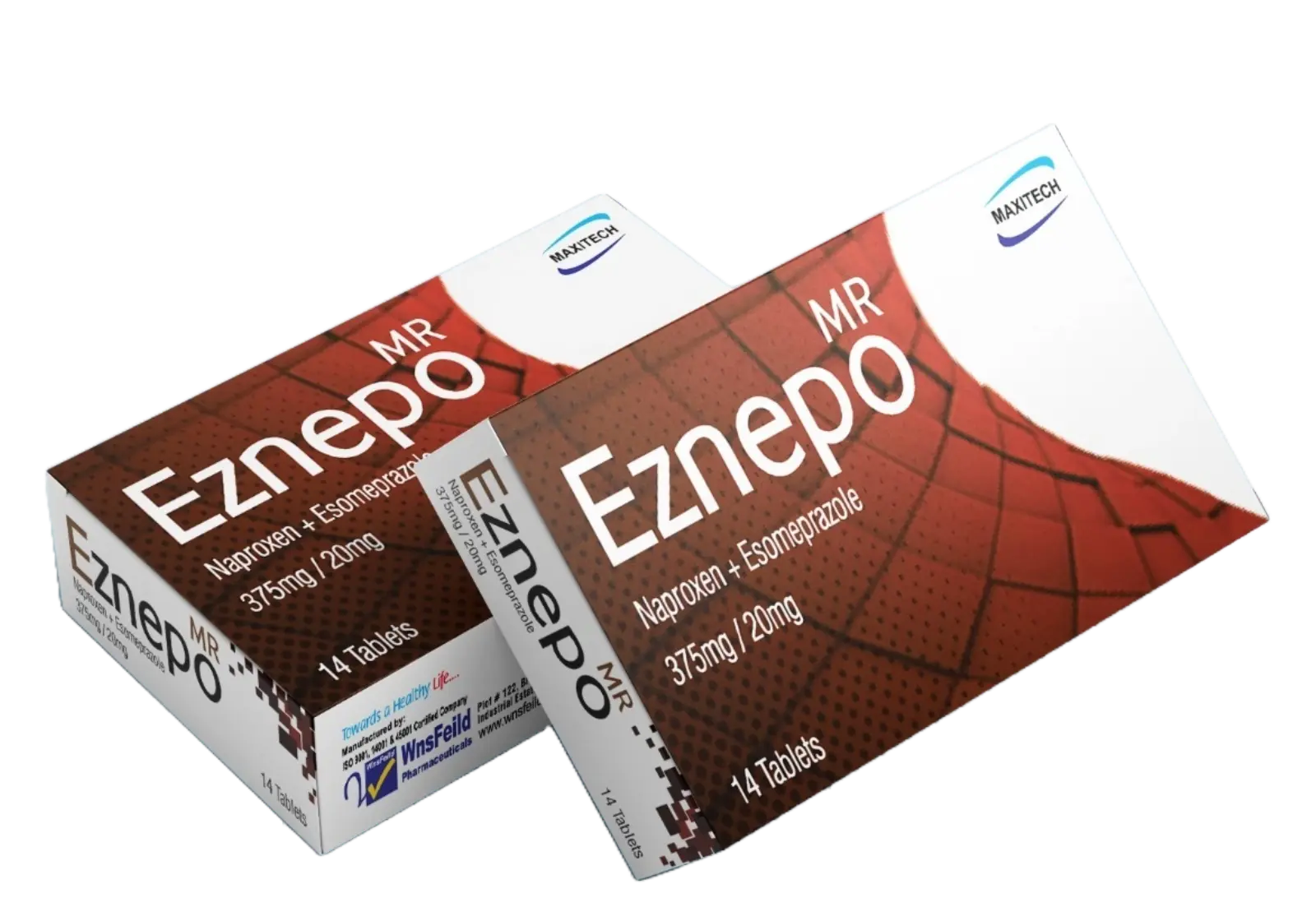
Eznepo
Description
The combination of Naproxen Sodium and Esomeprazole is a fixed-dose oral medication that combines a potent nonsteroidal anti-inflammatory drug (NSAID) with a proton pump inhibitor (PPI). This unique formulation is designed to provide the anti-inflammatory and analgesic benefits of naproxen while simultaneously protecting the stomach and small intestine from the risk of developing NSAID-induced ulcers and erosions.
Indications
This combination drug is specifically indicated for patients who require chronic NSAID therapy for conditions like osteoarthritis, rheumatoid arthritis, and ankylosing spondylitis and are at high risk for developing gastric ulcers. High-risk patients typically include those with a history of ulcers, the elderly, or those on long-term corticosteroid therapy.
The combination allows for the long-term use of naproxen while mitigating its most common and serious side effect: gastrointestinal damage.
Mechanism of Action
The therapeutic effect of this combination is based on the distinct yet complementary mechanisms of its two components:
- Naproxen Sodium (NSAID Component):
- Mechanism: Naproxen is a non-selective NSAID that works by inhibiting the cyclooxygenase (COX) enzymes, specifically COX-1 and COX-2.
- Action: This inhibition prevents the synthesis of prostaglandins, which are key mediators of inflammation, pain, and fever. The anti-inflammatory and analgesic effects of the drug are due to its inhibition of COX-2 at the site of inflammation.
- Side Effect: A major side effect of NSAIDs is that they also inhibit COX-1, which reduces the production of prostaglandins that are essential for protecting the stomach lining. This is a primary reason NSAIDs can cause ulcers.
- Esomeprazole (Proton Pump Inhibitor Component):
- Mechanism: Esomeprazole is a proton pump inhibitor. It is a prodrug that is converted to its active form in the acid-secreting parietal cells of the stomach. The activated form then irreversibly binds to the H+/K+-ATPase enzyme (the proton pump).
- Action: By irreversibly blocking the proton pump, esomeprazole effectively inhibits the final step of gastric acid secretion, leading to a profound and prolonged reduction in stomach acid.
- Counteracting Side Effects: The acid-suppressing action of esomeprazole counteracts the ulcerogenic effects of naproxen. By reducing the acidity of the stomach, it allows the stomach lining to heal and reduces the risk of new ulcers forming.
In summary, the combination provides a dual-action therapy: naproxen effectively manages the pain and inflammation of chronic conditions, while esomeprazole provides potent gastroprotection, making the treatment safer for at-risk patients who need long-term NSAID therapy.
Reviews
There are no reviews yet.