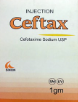
Description
Ceftax
Description
Cefotaxime is a broad-spectrum, semi-synthetic, third-generation cephalosporin antibiotic.
Indications
Cefotaxime is used to treat a variety of serious bacterial infections, particularly when the causative organism is known to be susceptible or when a broad-spectrum antibiotic is needed before the specific organism is identified.
- Central Nervous System (CNS) infections: Such as meningitis.
Cefotaxime can cross the blood-brain barrier, making it effective for this purpose.
- Lower Respiratory Tract Infections: Including pneumonia.
- Genitourinary Infections: Such as urinary tract infections (UTIs), cervicitis, and urethritis.
- Gynecologic Infections: Including pelvic inflammatory disease (PID), endometritis, and pelvic cellulitis.
- Intra-abdominal Infections: Such as peritonitis.
- Sepsis or septicemia (bloodstream infections)
- Bone and joint infections: Such as osteomyelitis.
- Skin and soft tissue infections
- Surgical prophylaxis: It may be used to prevent infections before and after certain surgical procedures.
Mechanism of Action
Cefotaxime, like other beta-lactam antibiotics, works by inhibiting the synthesis of the bacterial cell wall.
- Binding to Penicillin-Binding Proteins (PBPs): Cefotaxime’s chemical structure contains a beta-lactam ring.
This ring has a high affinity for and binds to a group of enzymes located in the bacterial cytoplasmic membrane known as penicillin-binding proteins (PBPs).
- Inhibition of Transpeptidation: PBPs play a vital role in the final stage of bacterial cell wall synthesis.
Specifically, they catalyze the transpeptidation reaction, which cross-links peptidoglycan units to form a strong, rigid cell wall. - Cell Wall Instability and Lysis: By binding to and inactivating the PBPs, cefotaxime prevents the cross-linking of the peptidoglycan chains.
This weakens the cell wall, making it structurally unstable.
- Autolysis and Cell Death: The weakened cell wall can no longer withstand the osmotic pressure from within the bacterial cell.
This leads to the activation of bacterial autolytic enzymes, which cause the cell to swell and eventually lyse (burst), resulting in cell death.
A key feature of cefotaxime is its stability against many beta-lactamase enzymes, which are produced by some bacteria to break down beta-lactam antibiotics.
Reviews
There are no reviews yet.