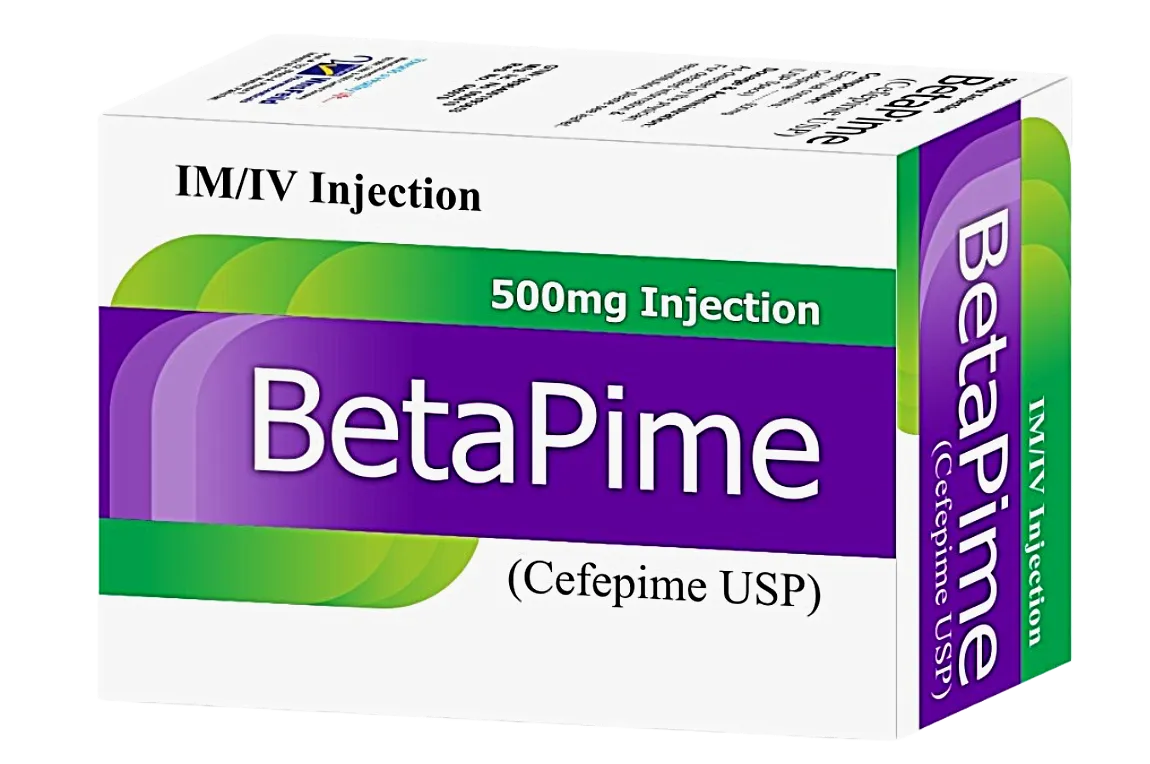
Description
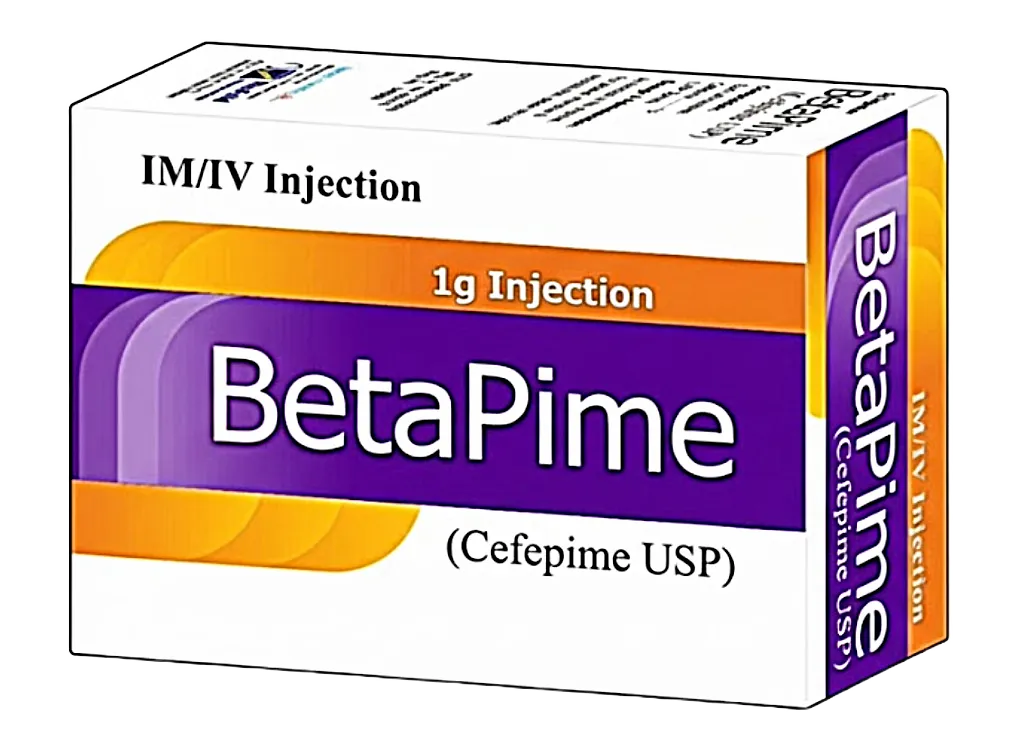
Betapime 500mcg (Cefepime)
-
Description
Cefepime is a fourth-generation cephalosporin antibiotic.
It is a broad-spectrum, semi-synthetic, bactericidal drug, meaning it kills bacteria. It is administered parenterally, either through intravenous (IV) injection or intramuscular (IM) injection. Cefepime is a zwitterion, a molecule that has both a positive and negative charge, which enhances its ability to penetrate the outer membrane of Gram-negative bacteria. This unique feature contributes to its broad-spectrum activity and makes it a key antibiotic for treating serious hospital-acquired infections. Indications
Cefepime is primarily used to treat moderate to severe bacterial infections, particularly in hospital settings where infections with multi-drug-resistant organisms, such as Pseudomonas aeruginosa, are a concern.
Its indications include: - Pneumonia: Both community-acquired and nosocomial (hospital-acquired) pneumonia.
- Empiric Therapy for Febrile Neutropenia: It is a common first-line treatment for patients with a fever and a low white blood cell count (neutropenia), as this population is at high risk for severe infections.
- Urinary Tract Infections (UTIs): Including complicated and uncomplicated UTIs and pyelonephritis (kidney infection).
- Skin and Soft Tissue Infections: For uncomplicated infections.
- Complicated Intra-abdominal Infections: Often used in combination with other antibiotics, such as metronidazole, to treat infections like peritonitis.
- Other Severe Infections: Cefepime can also be used to treat meningitis, bloodstream infections (sepsis), and bone and joint infections.
Mechanism of Action
Cefepime, like all beta-lactam antibiotics, works by disrupting the synthesis of the bacterial cell wall, a crucial structure for the bacterium’s survival.
The mechanism involves the following key steps: - Inhibition of Penicillin-Binding Proteins (PBPs): Cefepime’s beta-lactam ring binds to and inhibits penicillin-binding proteins (PBPs).
These are a group of enzymes located in the bacterial cell membrane that are essential for the final stage of cell wall synthesis. - Disruption of Peptidoglycan Cross-linking: PBPs catalyze the transpeptidation reaction, which cross-links peptidoglycan chains to form a strong, rigid cell wall.
By binding to and inactivating PBPs, cefepime prevents this cross-linking.
- Osmotic Lysis and Cell Death: The disruption of the cell wall’s structural integrity makes the bacterium unable to withstand its own internal osmotic pressure.
This leads to the activation of autolytic enzymes within the cell, causing the cell to swell and eventually rupture (lyse), resulting in the death of the bacterium.
A significant advantage of cefepime is its enhanced stability against a wide range of beta-lactamase enzymes, including those produced by Gram-negative bacteria that can degrade other cephalosporins.
This stability, along with its ability to rapidly penetrate the outer membrane of Gram-negative bacteria, gives it a broader and more potent spectrum of activity compared to earlier generations of cephalosporins. - Empiric Therapy for Febrile Neutropenia: It is a common first-line treatment for patients with a fever and a low white blood cell count (neutropenia), as this population is at high risk for severe infections.
Reviews
There are no reviews yet.