
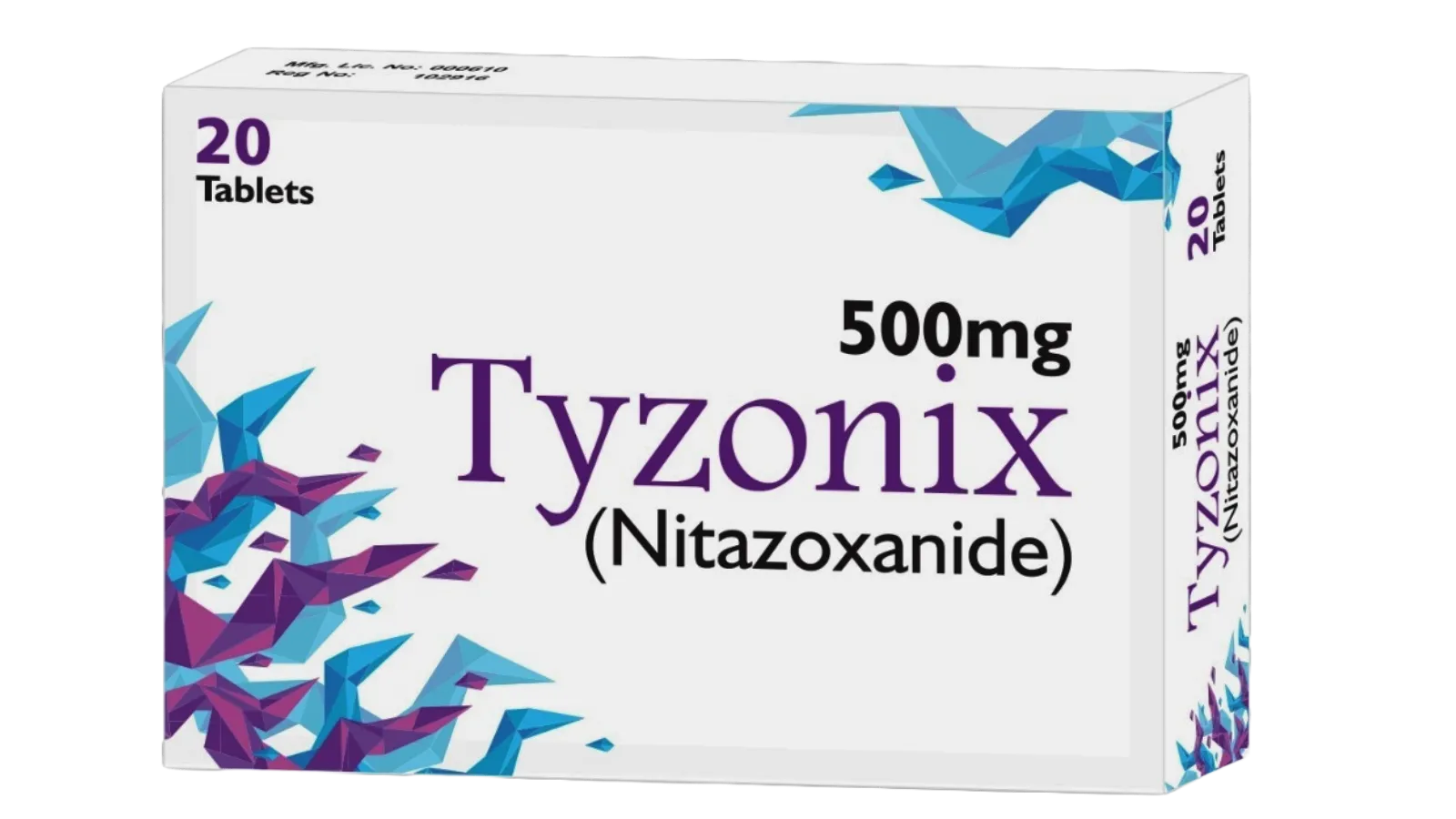
Description
- Description
-
Nitazoxanide is a synthetic, broad-spectrum antiparasitic and antiviral drug.
It is the first drug of its class, known as thiazolides, which are synthetic nitrothiazolyl-salicylamide derivatives. After oral administration, nitazoxanide is rapidly metabolized into its active form, tizoxanide. It is available in both tablet and oral suspension forms. Indications
Nitazoxanide is primarily indicated for the treatment of diarrhea caused by specific protozoal infections in adults and children:
- Diarrhea caused by Giardia lamblia: A common parasite that causes giardiasis, an infection of the small intestine.
- Diarrhea caused by Cryptosporidium parvum: A protozoan that causes cryptosporidiosis, a diarrheal disease.
While it is FDA-approved for these specific indications, nitazoxanide has demonstrated a broad spectrum of activity against a wide range of other parasites (including various helminths), anaerobic bacteria (e.g., Clostridium difficile), and certain viruses.
Because of this, it is sometimes used off-label for other conditions, such as: - Intestinal parasites: Infections caused by Entamoeba histolytica, Ascaris lumbricoides, and others.
- Viral infections: It has shown some activity against influenza viruses, hepatitis B and C viruses, and noroviruses, but more research is needed to support these uses.
Mechanism of Action
Nitazoxanide’s mechanism of action is unique and multi-faceted, allowing it to act on various pathogens.
Its primary antiprotozoal effect is related to its interference with anaerobic energy metabolism. - Inhibition of Pyruvate Ferredoxin/Flavodoxin Oxidoreductase (PFOR):
Nitazoxanide and its active metabolite, tizoxanide, work by inhibiting a key enzyme in anaerobic metabolism called pyruvate ferredoxin/flavodoxin oxidoreductase (PFOR). PFOR is essential for the energy metabolism of many anaerobic bacteria and protozoa.
- Disruption of Electron Transfer: The drug interferes with the PFOR-dependent electron transfer reaction.
By blocking this process, it effectively starves the pathogen of energy, which prevents it from growing, multiplying, and performing vital functions. This leads to the death of the microorganism.
In addition to this primary mechanism, nitazoxanide also has other actions that contribute to its broad-spectrum activity:
- Inhibition of Glycoprotein Maturation: For viruses like coronaviruses, nitazoxanide has been shown to interfere with the maturation of viral glycoproteins, such as the spike protein.
This can impair the virus’s ability to replicate and assemble.
- Disruption of Other Enzymes: Studies suggest that nitazoxanide may also inhibit other enzymes and pathways in various pathogens, including quinone oxidoreductase and glutathione-S-transferase, which are involved in drug detoxification and other essential processes.
- Diarrhea caused by Giardia lamblia: A common parasite that causes giardiasis, an infection of the small intestine.
-
Reviews
There are no reviews yet.